
Finding new hope for ovarian cancer patients
4 min read 27 February 2026
In recognition of Ovarian Cancer Awareness Month, we’re pleased to spotlight Professor David Bowtell and his team at Peter Mac, who are working hard to improve outcomes of the deadliest cancer affecting women in Australia.
Ovarian cancer refers to cancer of the ovaries and fallopian tubes. With the highest mortality rate of all cancers affecting women in Australia, nearly half of women who are diagnosed do not survive their cancer. In 2025, ovarian cancer was the fifth most common cancer cause of death amongst women in Australia.
Professor David Bowtell is a leading researcher at Peter Mac. Professor Bowtell and his hardworking research team at Peter Mac are committed to transforming the future of ovarian cancer and bring new hope for women diagnosed. A key focus of the David Bowtell lab is studying the genes and immune system in ovarian cancer to uncover insights that can be translated into more precise and effective therapies.
“Unfortunately, many of the advances in ovarian cancer treatment have been incremental or short-lived, particularly when a patient’s cancer adapts to resist treatment,” says Professor Bowtell.
 Professor David Bowtell
“Compared with some other cancers, including breast cancer, there has been less improvement in survival rates for patients with ovarian cancer over the past fifty years. Because the symptoms are often vague, many women are most commonly diagnosed when the cancer has reached an advanced stage.”
By understanding the biology of how ovarian cancer responds to and resists treatment, the lab hopes to then translate these understandings into new and improved treatment approaches.
Professor Bowtell and his team are pursuing multiple initiatives to help improve outcomes in ovarian cancer:
Understanding how ovarian cancer learns to resist treatment
Currently, the key hurdle towards achieving lasting remission and cure in ovarian cancer is ‘acquired resistance’. This is when the cancer adapts to resist treatment and continues growing.
Using a range of biological samples, the team is seeking to better understand measurable signs in the body that show a treatment is working, and which signs show that it isn’t. This work was pioneered by Dr Liz Christie when she was a post-doc in the Bowtell lab and since 2022 work on drug resistance has transferred to her lab at Peter Mac.
Understanding ‘exceptional responders’ and long-term survivors of ovarian cancer
While a lot of ovarian cancer studies have focused on the poor survival rates, the Bowtell lab focuses on patients who survived more than 10 years, often with no evidence of recurrence. By studying the genes and immune responses of people who responded to ovarian cancer treatment, they are rapidly learning what contributes to long-term survival. The Exceptional Responders study is led by Dr Dale Garsed, Senior Lab Scientist, and comprises of Postdoctoral Researcher Dr Bonnie Werner, PhD student and Medical Oncologist Dr Zarka Samoon, and bioinformaticians Laura Twomey and Ahwan Panday.
Advocating for genetic testing
Inherited mutations in the BRCA1 and BRCA2 genes, which are also commonly linked with breast cancer, significantly increase a person’s likelihood of developing ovarian cancer. By letting people know if they have these gene mutations, they are empowered to manage their risk and have increased treatment options for ovarian cancer. This work forms part of the larger Australian Ovarian Cancer Study aimed at improving the prevention, diagnosis, and treatment of ovarian cancer.
Each of the projects aligns with a larger initiative – programs on acquired resistance and exceptional survival. Thank you for supporting real progress for patients and families affected by ovarian cancer.
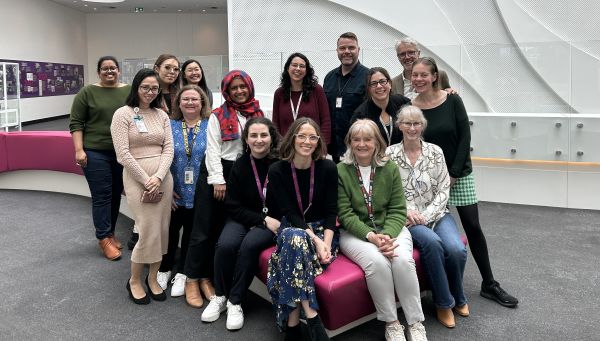 The David Bowtell lab team at Peter Mac, who are determined to improve outcomes for everyone diagnosed with ovarian cancer.
@Follow us on Instagram (@SupportPeterMac)