

Helping women across the breast cancer trajectory
4 min read 20 October 2025
October is Breast Cancer Awareness Month and we are pleased to highlight the work of Peter Mac researcher Professor Kelly-Anne Phillips, which focuses on improving prevention and treatment for breast cancer.
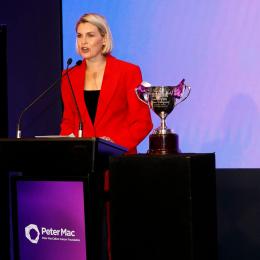
 Professor Kelly-Anne Phillips is leading a range of lifesaving breast cancer research initiatives.
Breast cancer is the most common cancer in Australian women, affecting one in seven women. Many of these cases can be prevented, and for women who do get breast cancer, treatments can have unwanted side effects such as premature menopause and infertility. Personalised breast cancer prevention and care has enormous potential to address this, but more research is needed.
Prof Phillips, a medical oncologist and leading researcher at Peter Mac, is on a mission to improve the landscape of breast cancer in Australia. One of her key research initiatives seeks to transform how breast cancer risk is assessed and managed across the Australian population. There are many different risk factors for breast cancer – genetic, physiological, and environmental – which vary from person to person. Personalised screening and prevention approaches are essential to help women manage their individual cancer risk. This includes preventive medications for women at increased risk.
“About 1 in every 5 women is at increased risk for breast cancer. So far, we have given women resources to help them identify and manage their own risk, such as the iPrevent tool and the Peter Mac Preventing Cancer with Medications Telehealth Service,” says Prof Phillips.
“Looking ahead, our research will look at how we can ensure equity of access to these resources, so that no woman is left behind. “
Alongside her important prevention work, Prof Phillips is also investigating how clinical trials can be better designed to ensure that women and clinicians have key information about how certain treatments could affect the ovaries. By arming women and clinicians with this knowledge, they can make more informed decisions about which treatment they receive. This would help many women to avoid the undesirable long-term effects of some treatments. Says Prof Phillips:
“Although cancer clinical trials collect very detailed information about the side-effects of new treatments, they have historically overlooked the effect of treatments on fertility and female hormones. We’ve led research that has made collecting this vital information in cancer trials become more routine.
“Next, we are planning to use stored blood from completed trials to assess markers of fertility so we can better understand the impact of cancer treatments that are already in routine use.”
Ultimately, Prof Phillips’ research aims to turn the rising tide of women diagnosed with breast cancer, while allowing women who are diagnosed with breast cancer a better chance of survival and quality of life once they finish treatment.
Thank you to all Peter Mac Foundation supporters. Your generosity changes the lives of all people affected by cancer, including people diagnosed with breast cancer.
@Follow us on Instagram (@SupportPeterMac)